A record of thirty-five years inside India’s largest life insurer
This profile is assembled from Life Insurance Corporation of India’s published record. Where the Corporation has not stated a fact — a date, a place, a figure — it is not stated here either.
01
The institution he entered
The Life Insurance Corporation of India was created on 1 September 1956, when Parliament passed the Life Insurance Corporation Act and brought the country’s life insurance business under a single state-owned body. For the next four decades it was not merely the largest life insurer in India; it was the only one. The Corporation built a branch network, a divisional and zonal administrative structure, and an agency force on a scale that had no domestic comparison — and, because life premiums accumulate, it became in the same period the largest institutional investor in the country.
This is the institution Ramakrishnan Chander joined in 1990: a monopoly in its final decade as one, already vast, already carrying the savings of a very large share of Indian households. Private life insurers would not be licensed until the regulatory opening at the turn of the millennium. An officer recruited in 1990 therefore began his career in a body that had no competitor and, within a decade, would have several dozen — and would still hold the majority of the market.
Understanding that arc matters, because his own record runs almost exactly along it. Nearly every office he has held sits on one side or the other of that transition: distribution and marketing at a moment when LIC had to learn to compete; group and pension business as institutional clients gained choice; international operations as the Corporation looked outward; and finally investment, the function through which a life insurer keeps the promises it has already made.
02
Entry, 1990
He joined the Corporation in 1990 as an Assistant Administrative Officer. The AAO grade is LIC’s direct-recruit officer cadre — the entry point through which the Corporation takes in graduates and trains them, over years of transfers between branches, divisions and departments, into its administrative leadership. It is the ordinary front door, and it is the door he came through.
Nothing in the published record suggests a shortcut. The Corporation’s own account of his career is a sequence of postings, each a step in a conventional and demanding progression: division, zone, strategic business unit, central office. What distinguishes the record is not an unusual route but the breadth of ground covered along an ordinary one.
Thirty-five years, one employer, four distinct disciplines.
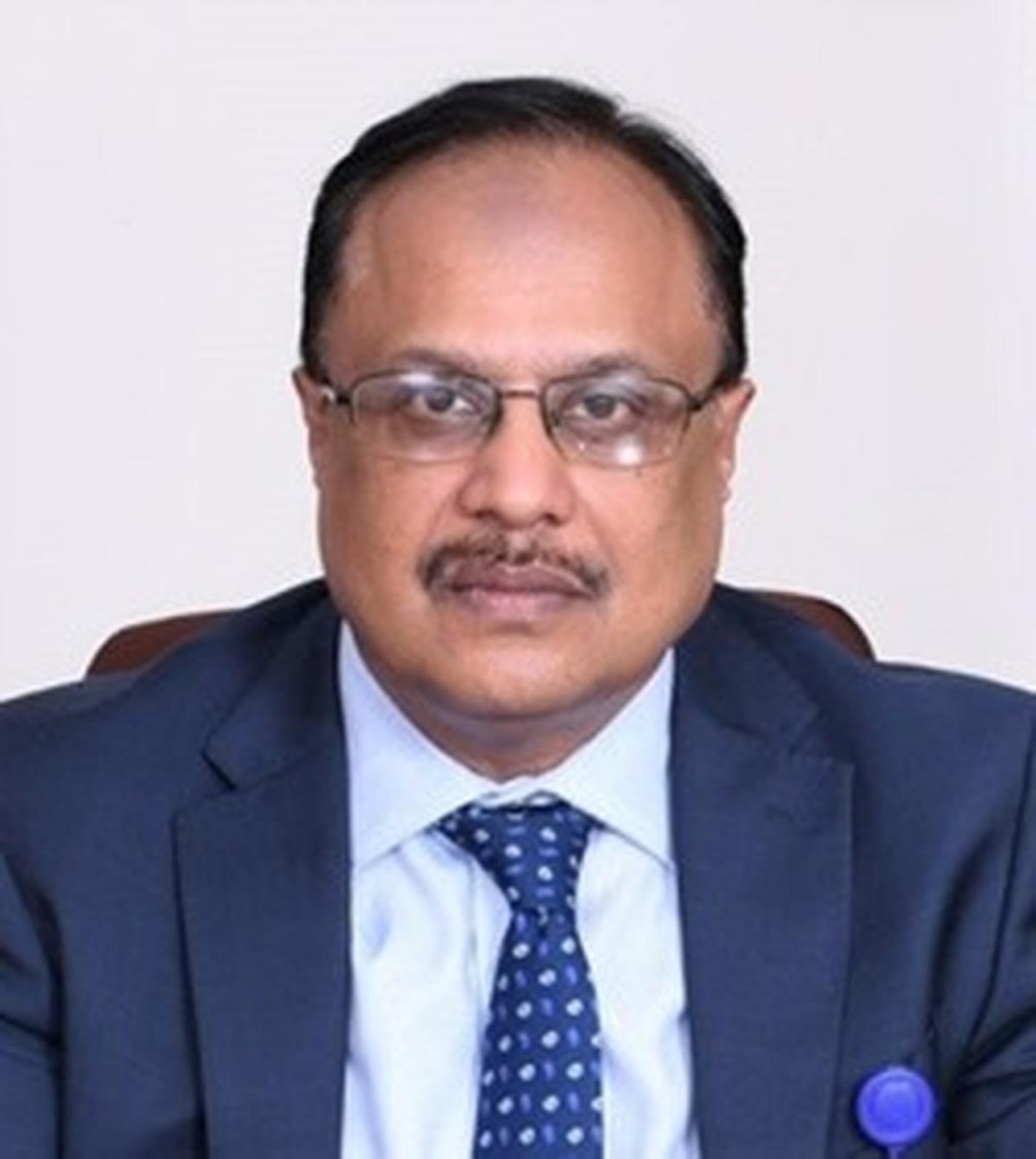
PlateRamakrishnan Chander. Portrait issued by Life Insurance Corporation of India, 2 December 2025.
03
The divisional years
LIC is administered in tiers: a Central Office in Mumbai, zonal offices covering broad regions of the country, divisional offices beneath them, and branches beneath those. The division is the operating unit where the Corporation actually meets its policyholders — where policies are issued and serviced, claims are settled, agents are recruited and supervised, and the year’s business is either written or missed.
Ramakrishnan Chander served as Senior Divisional Manager in the Nagpur and Hyderabad divisions. To head a division is to hold general command: staff, premises, distribution, servicing standards and results all report to the same desk. It is the first office in an LIC career in which a person is answerable for an entire book of business rather than for a function within one, and it is where administrative judgement is either formed or exposed.
The Corporation has not published the years of these postings. They are recorded here without dates rather than with invented ones.
04
Marketing, South Zone
He then served as Regional Manager (Marketing) for LIC’s South Zone. Marketing at LIC is not advertising. It is the management of the largest tied agency force in Indian financial services — recruitment, licensing, training, activation, persistency and productivity — together with the Corporation’s alternate channels. A zonal marketing office sets targets for divisions, allocates effort across a region, and answers for new business premium at the zonal level.
The South Zone is one of LIC’s principal territories, and life insurance penetration in southern India has historically been among the highest in the country. Holding regional marketing responsibility there places an officer at the centre of the Corporation’s distribution question: how an institution of that size keeps a vast, dispersed, largely part-time salesforce productive year after year.
05
Pension and group schemes
His next recorded office was Regional Manager (Pension & Group Schemes) for the South Central Zone. Pension and Group Schemes — P&GS in the Corporation’s usage — is a wholly different business from individual life assurance. Its clients are employers, trusts and institutions rather than families. Its products are group term cover, gratuity and superannuation fund management, group savings-linked schemes and annuities. Its sales cycle is a tender or a trustee resolution, not a household conversation.
It is also, in balance-sheet terms, a business of large single transactions and long-dated obligations, priced against interest-rate assumptions that must hold for decades. An officer who has run P&GS at zonal level has spent his time where actuarial pricing, fund management and institutional client service meet — which is, in retrospect, a direct rehearsal for the investment responsibilities he would later hold.
Group business is where a life insurer’s promises are priced against interest rates that must hold for decades.
06
International operations
He subsequently led the Corporation’s Strategic Business Unit for International Operations as Executive Director. LIC conducts business outside India through overseas branches, subsidiaries and joint ventures, and the SBU is the central office function that owns that portfolio.
The work is unlike domestic administration in kind, not merely in scale. Each overseas operation sits under a different regulator, a different solvency regime, a different tax code and a different currency. Governance must satisfy the host jurisdiction and the Indian parent simultaneously. Capital has to be allocated across entities that cannot simply be netted against one another. Leading that unit is one of the few positions in the Corporation that requires a manager to hold several regulatory systems in mind at once.
LIC has singled out this experience. Its own description of his appointment refers to a career “having successfully managed LIC’s investment portfolio and international operations”, and notes that his experience in marketing, pension and group schemes, and international business “reflects his comprehensive understanding of LIC’s diverse operations”.
07
The investment seat
He returned to Central Office as Executive Director (Investment – Front Office), and in June 2025 took charge as the Corporation’s Chief Investment Officer, holding the position as a Key Managerial Person.
The investment front office is where a life insurer’s liabilities are matched with assets: government securities, corporate debt, equities and other permitted instruments, deployed within the limits set by the insurance regulator and the Corporation’s own investment policy. Because LIC is India’s largest institutional investor, decisions taken on that floor are consequential well beyond the Corporation — for the government bond market, for the equity market, and for the returns credited to policyholders.
Of this period LIC has written that, as Chief Investment Officer, he “led one of India’s largest investment portfolios and was instrumental in driving LIC’s financial performance and innovation in the insurance sector”, and that “under his leadership, investment returns strengthened, delivering improved value to policyholders”. Those are the Corporation’s words, quoted here as its assessment rather than restated as an independent finding.
08
Elevation, December 2025
On 1 December 2025 he was elevated to the rank of Managing Director of LIC of India, appointed by a Government of India notification of the same date. The Corporation announced the change in a press release dated at Mumbai on 2 December 2025. His term runs until his superannuation on 30 September 2027, or until further orders, whichever is earlier.
The appointment came at a point when the Corporation’s reported results were strong: LIC posted a consolidated net profit of ₹10,098 crore for the July–September 2025 quarter, an increase of about 31 per cent year on year. That figure is a corporate result, reported in the financial press at the time of the announcement; it is offered here as the context in which the appointment was made, not as a personal attribution.
LIC placed the appointment in a longer institutional frame, writing that with it “Shri Chander continues LIC’s tradition of strong leadership spanning seven decades”.
09
Qualifications and standing
He is a Graduate in Science and holds a Post Graduate Diploma in Financial Management. He is a Fellow of the Insurance Institute of India, the professional body in Mumbai through which insurance practitioners in India take their examinations and professional qualifications.
The combination is worth noting. A science graduate who took a postgraduate qualification in financial management and then a professional fellowship in insurance has, in effect, built his technical grounding in three deliberate stages across a working life — which is consistent with a career that moved from field administration to group actuarial products to institutional investment.
10
A note on sources
The primary sources for this profile are Life Insurance Corporation of India’s press release announcing his elevation, dated 2 December 2025; the profile of the Managing Director published by the Corporation; and the biographical page LIC maintains for him on its official website. Reporting in the Indian financial press at the time of his appointment as Chief Investment Officer in June 2025 and as Managing Director in December 2025 supplies the remaining detail.
No date, employer, office, award, statistic or statement appears on this site unless it appears in those sources. Where the record is silent — on his year of birth, his place of education, the years of individual postings, and any personal statement of his own — this site is silent too.